

2025 Harmful Exclusion Alleviation Longitudinal Study (HEALS) Survey Findings
Columbia University has released findings from the 2025 Harmful Exclusion Alleviation Longitudinal Study (HEALS) survey, which measured students’ sense of belonging, inclusion, expression, and discrimination, as well as their comfort reporting hate-based incidents.
The results provide insight into how students felt about their connection to the Columbia community during the 2024-2025 academic year. You can learn more about the survey methodology below.
Additional information about the survey can be found in Frequently Asked Questions. To share thoughts about the HEALS survey or its results, email [email protected]. Please note that questions and comments submitted will not be associated with your name or identity to the extent possible.
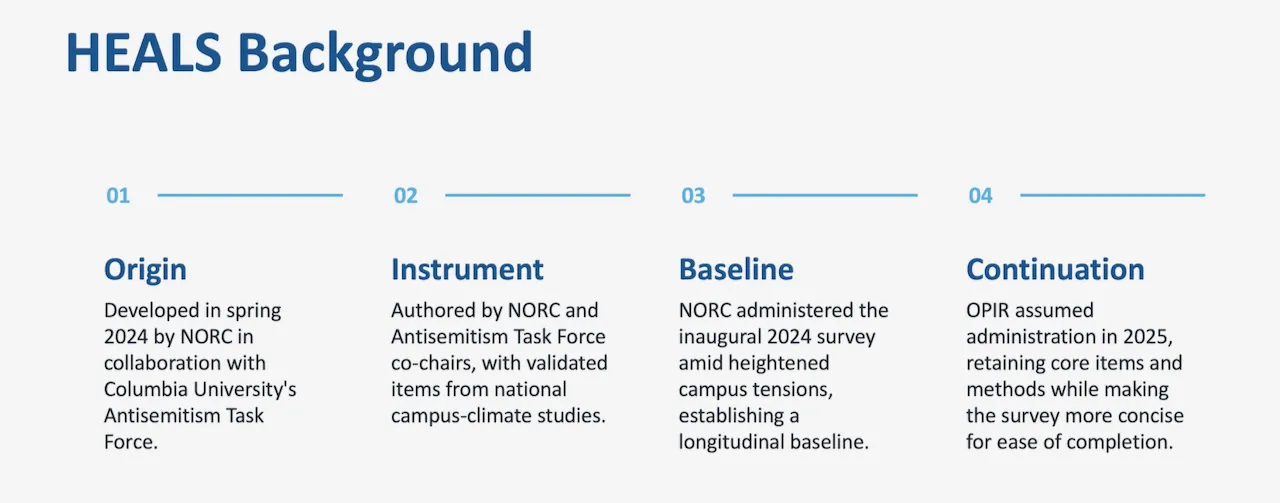
The survey was developed in spring 2024 by the National Opinion Research Center (NORC), in collaboration with Columbia University’s Antisemitism Task Force, to assess student experiences amid heightened tensions during the 2023-2024 academic year.
The first HEALS survey established a baseline for comparison, particularly around student belonging, religious identity, and comfort expressing views on campus. Findings from the first survey are available in Report #3 from the Task Force on Antisemitism.
Columbia’s Office of Planning and Institutional Research (OPIR) assumed administration of the second HEALS survey in 2025 to measure change over time. OPIR retained the survey’s core items and methodology to preserve comparability, while consolidating the questionnaire so that students were more likely to complete it.
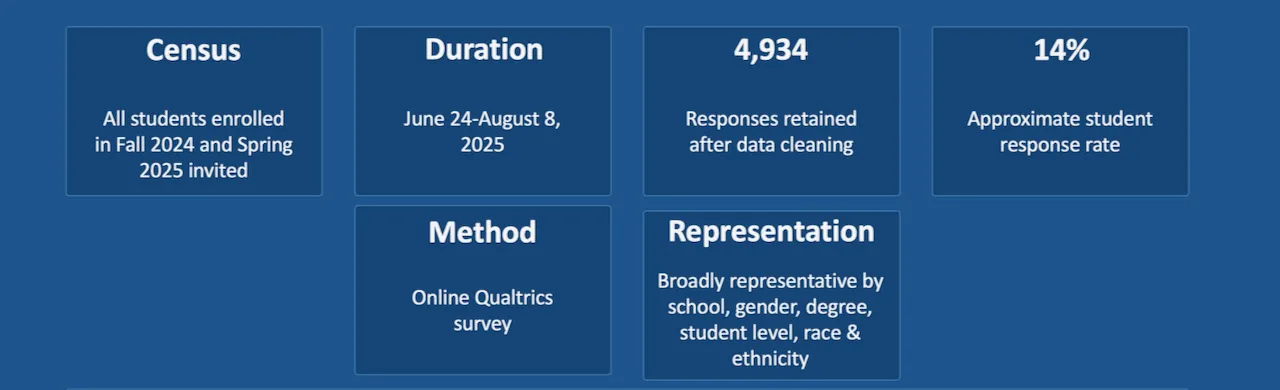
The 2025 survey invited all enrolled students to participate. There were 4,934 completed surveys, representing a 14 percent response rate. Respondents were broadly representative of Columbia’s student population by school, degree level, gender, and race/ethnicity.
Participation was voluntary, responses were private, and the results are used exclusively for assessment purposes.
Key Resources and Support
The following resources support student belonging, well-being, and community at Columbia.
This initiative helps students develop the skills and awareness to contribute to a respectful, inclusive, and accountable University community.
Connects students with religious and spiritual communities across campus, supported by the Office of Religious Life.
Listening Tables are designed to generate connection and understanding as well as a reservoir of feedback and new ideas in these most difficult areas.
This page answers common questions about the University’s anti-discrimination and discriminatory harassment policies, including how reports are reviewed and what support is available.
A peer-support initiative that brings together students from across Columbia to help fellow students understand and navigate the Dean’s Discipline process.
Supporting students on the Morningside and Manhattanville campuses, Columbia Health offers an extensive collection of programs, resources, and services to support student well-being.
Offers CUIMC students a wide range of programs, resources, and services to support their well-being.